
You exported one vertical video, pasted the same caption, and dropped that file into Instagram, TikTok, Threads, and X before lunch. Cross posting on social media means distributing one core idea across networks while changing the execution so each feed can rank and be watched on its own terms. More surfaces can reach people who don't all live in one app. A synchronized paste often misses the hook, sound, length, or hour that lets a native post travel.
Table of Contents
Why One Post Rarely Fits Every Feed
Feeds do not share ranking rules, watch-time habits, or caption conventions. A cafe owner learned that in one afternoon. She filmed a 20-second pour-over tip, laid a trending audio bed under it, wrote one caption ending in "link in bio," and scheduled that identical file everywhere at 9:00 a.m. because that was when she sat down to post. By evening the Reel had a few saves from regulars. The TikTok stalled inside the first second. The Threads post read like a video caption with nowhere to go. The idea was fine. The miss sat in three choices she never revisited: the opening frame, the runtime, and the hour.
The multi-platform audience behind her instinct is real. In Pew Research Center's Social Media Use in 2018 report, 42% of U.S. online adults used at least two of five measured services while 36% used only one. That multi-platform group split into 23% on two networks, 12% on three, 5% on four, and 2% on all five. The same report found roughly 73% of Twitter users and 77% of Snapchat users were also on Instagram. Overlap does not mean identical. The person who taps her Reel at lunch and opens TikTok at night still expects a different opening and a different pace in each feed, and those numbers say nothing about forgiving a duplicate.
So the question is never only "should this idea travel." It is "what is the smallest set of changes that makes it native here." A minimum-viable-adaptation pass works like a tailor's fitting: the garment stays, the hem and shoulders change per body. Sort each post into two columns before it ships. What stays identical: the claim, the point of view, the core visual. What must change: the hook, the length, the caption format, the release hour. Then run those variants and let each platform's results grade the test, because reuse is a hypothesis that performance either confirms or rejects.
Trendy is a cross-format co-pilot built for that pass, covering planning and per-platform adaptation across its web app and its mobile apps for iOS and Android.
What Cross Posting on Social Media Really Means
A paste habit feels like publishing. The behavior underneath is narrower. Cross-posting is a set of related broadcasts of one activity across networks inside a short time window, where the claim travels and the packaging is rebuilt for each room it enters. A byte-for-byte duplicate is the narrowest version of that behavior.
The minimum-viable-adaptation view sorts one post into fixed parts and moving parts. The claim, the offer, and the point of view stay identical. The hook, the length, the aspect ratio, and the caption are the parts that must change for a Reel, a TikTok, or a short text post. Reuse then becomes a test of those moving parts rather than a verdict that duplication is always smart or always lazy.
A 2015 study of users active on Flickr, Google+, Instagram, Tumblr, Twitter, and YouTube programmatically identified 111,431 cross-sharing activities, and sharing was uneven.
- Source platforms push outward: More than 90% of Instagram users in that study had shared an Instagram post to another network.
- Some networks stay home: Fewer than 20% of Flickr users and fewer than 20% of Google+ users in that study moved original content elsewhere.
- Overlap is not a shared habit: In that study, YouTube and Google+ shared 84.1% of users, while Instagram and Tumblr showed overlap of 78.8% and 68.5%. The same person can still want a different medium or social purpose on each one.
One recipe feeds several tables. The flavor stays. The plating changes with the room. A save-worthy still, a spoken tip, and a one-line opinion can come from the same claim without sharing a file.
What the old numbers don't prove
That research does not measure today's reach penalties, and it cannot tell you whether a familiar-looking Reel gets downranked next quarter. It separates three things you need before choosing an adaptation level: a shared idea, a source platform, and a destination format. If you cannot name all three, you are still pasting.
Teams that already run several logins can use a workflow for managing multiple social media accounts so the source and the destinations stay distinct in the calendar.
The same clip behaves differently once the feed changes, and the gap is easiest to see in motion.
When Sharing the Same Idea Helps or Hurts
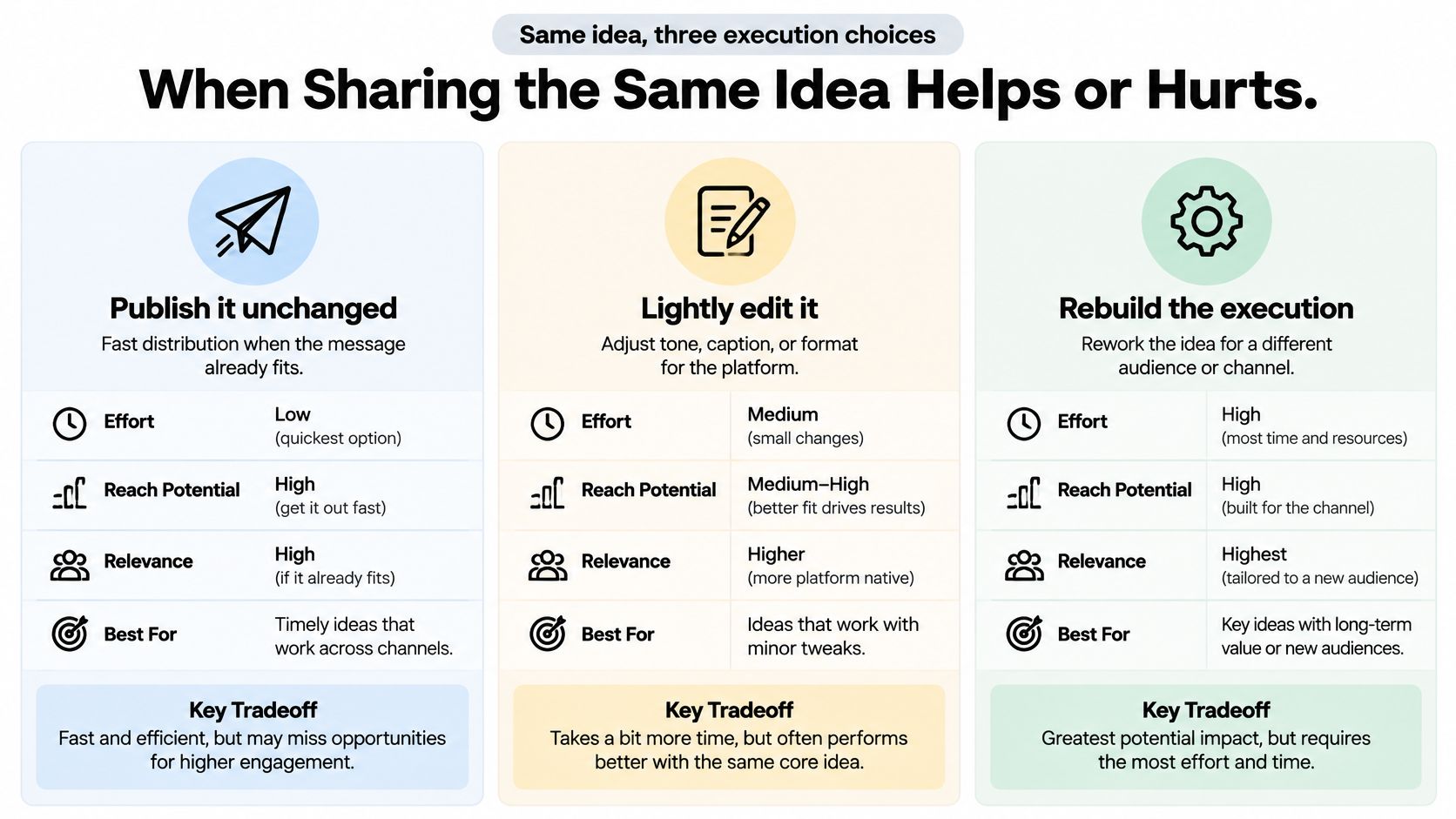
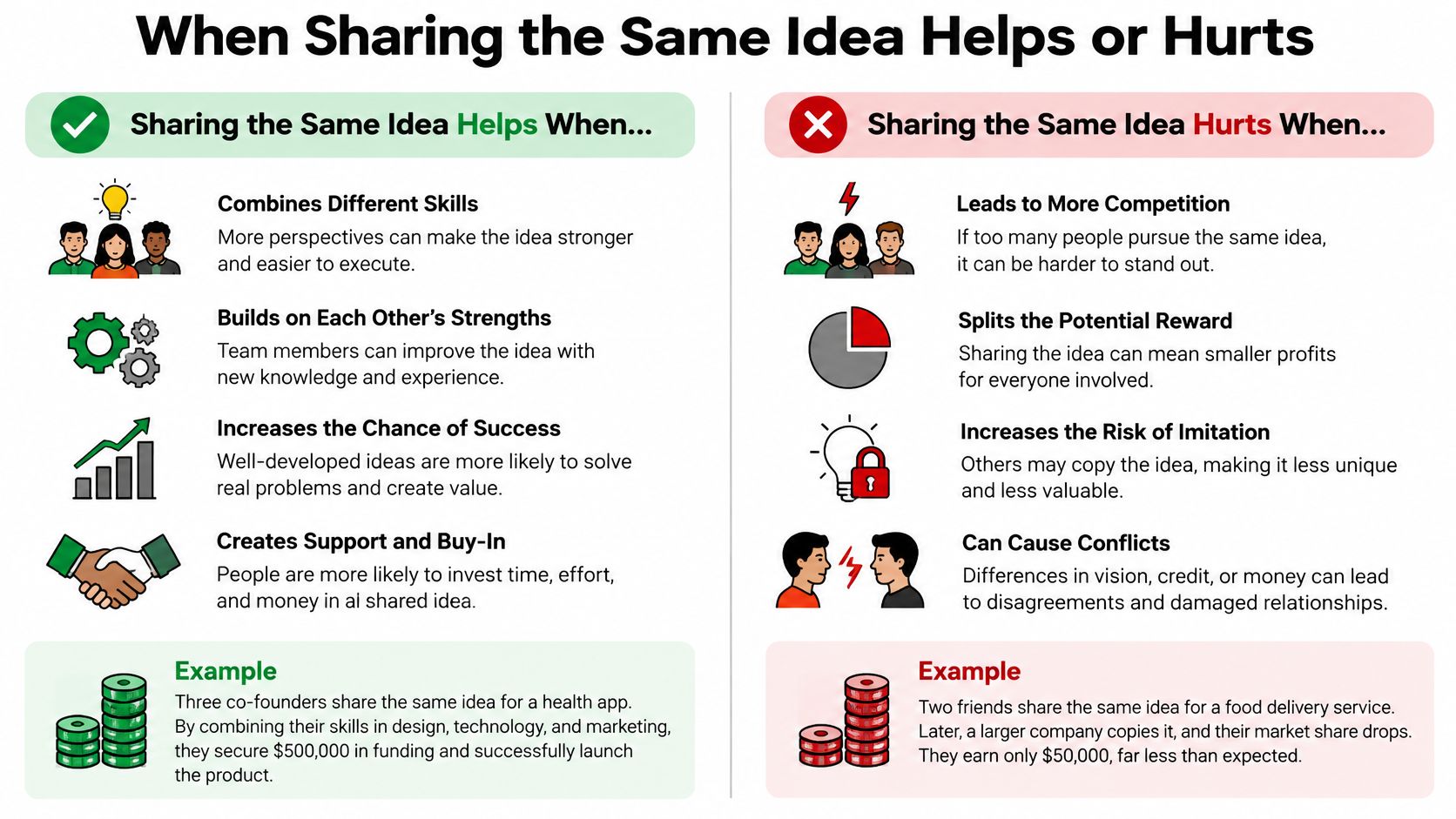
Three choices sit in front of every idea that already worked once. You can publish it unchanged, lightly edit it, or rebuild the execution. Blanket fear of duplicates is a weak rule. Blanket blasting is just as weak, because platform outcomes don't move together.
Metricool's analysis of 1,387,457 accounts and 21,211,149 posts across eight networks found sharply different results in the study period. Facebook post reach fell 41%. Instagram overall post reach rose 21%. Instagram Reels reach fell 20%. A separate look at more than 5 million short-form videos from 582,456 accounts reported a 71% year-over-year increase in short-form publishing, and found that reuse could still work on Instagram when a post returned after four to eight weeks with a changed hook or thumbnail. A universal cross-posting rule can't survive that spread.
A decision test, not a slogan
Ask what the destination rewards before you export.
- Unchanged fits when the message, ratio, and tone already match, and the audiences barely overlap.
- A light edit fits when the claim is sound but the caption, crop, or first line would feel imported.
- A rebuild fits when the room wants a different medium. A saveable carousel, a sound-led TikTok, and a short opinion can share a claim and still be three assets.
Practical rule: If you can't name the behavior the destination rewards, don't ship the source file.
Rebuild for reasons that have nothing to do with ranking, too. Music cleared on one service may not be cleared on another. Auto captions can mistranslate a joke. A regional audience may need a different call to action, a translated line, or alt text the source post never had. Originality isn't the test. Fit is.
How iHatePosting Can Help
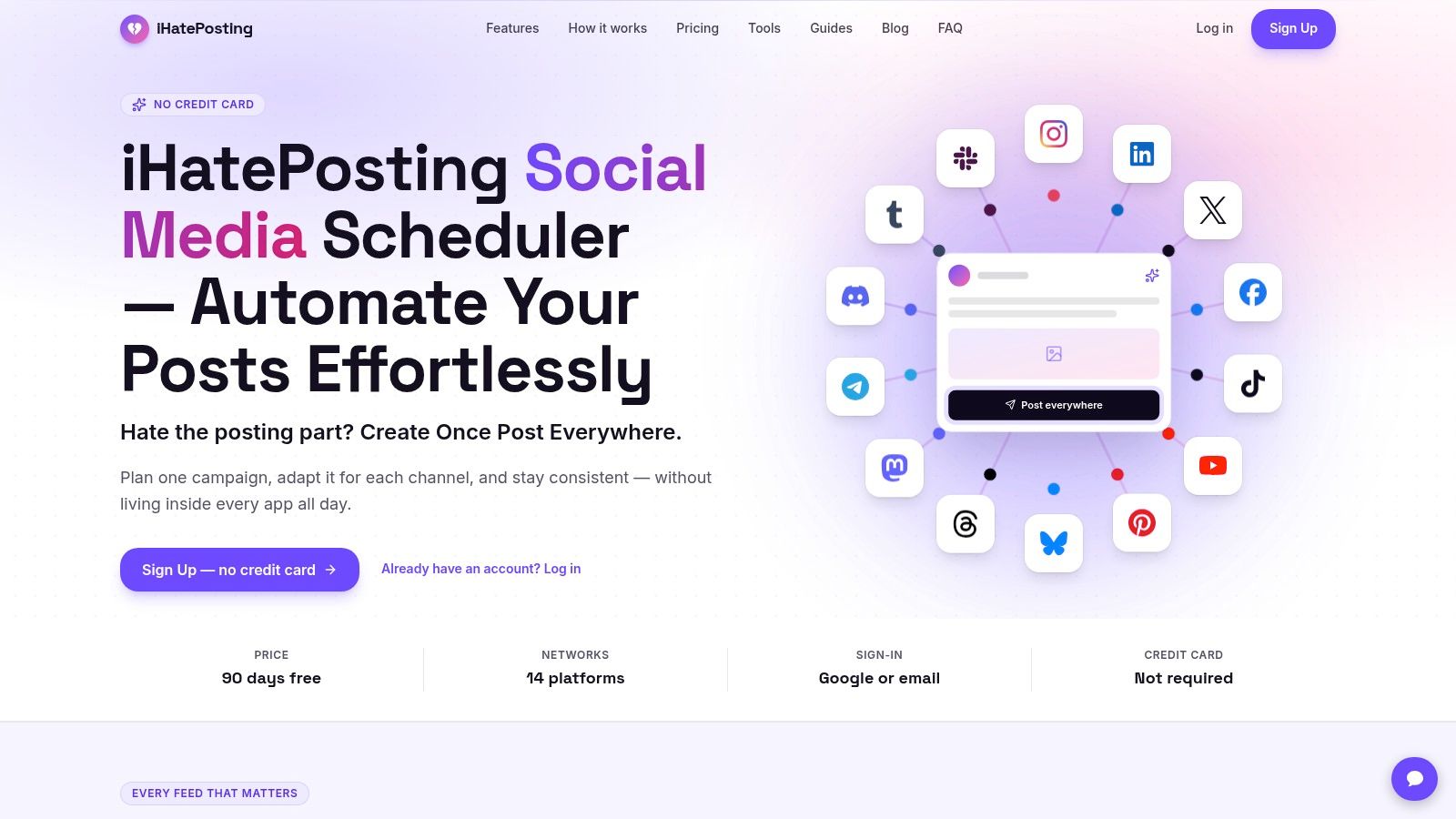
Once an idea has earned a second stop, the risk shifts from judgment to handling. The hook decision is made, then a caption sits in Notes, the vertical cut is in a camera roll, and the LinkedIn version goes out with TikTok wording still attached. A social media cross posting workspace such as iHatePosting keeps those moving parts in one calendar across fourteen networks, so the same campaign can leave the house in different clothes.
Use it as a variant desk
The useful unit is the adaptation. Keep the claim fixed, then give each destination its own small brief: first line, length, crop, caption, call to action, and the proof that will tell you the change worked. The composer covers Instagram, LinkedIn, Facebook, TikTok, YouTube, X, Bluesky, Threads, Mastodon, Telegram, Discord, Tumblr, Pinterest, and Slack. You attach the asset once, write beside a character counter, hashtag groups, and live preview, and keep Reels, carousels, and video tied to the post they belong to.
Campaign folders can group a launch, content pillar, creator partnership, product update, podcast episode, or seasonal push. Analytics keep about a year of history, export to CSV, and suggest posting times from that account's own results. Publishing can run automatically, retry after a network hiccup, and connect through an API, webhooks, Zapier, Make, or n8n. Plans are flat rather than per seat, with a free trial and higher tiers for more accounts and priority human support.
When it earns its place
Choose it when logistics are the leak. Example: a 500-character Thread should never inherit a 2,000-character caption, and a pre-publish check should catch that before queueing. It helps less when the open itself is still undecided. Pair the calendar with whichever drafting space shapes the spoken hook or carousel frames, then let dates, variants, and results stay connected.
Small Edits That Stop Exact Duplication
Keep one canonical object. The topic, the claim, the visual identity, and a campaign ID all stay fixed, because those are what make three posts recognizably the same idea. Everything else is a candidate for change. The minimum-viable-adaptation question is narrow: which elements can this destination not share well? You don't need to film the cafe tip twice. You need a variant sheet that marks what stays and what moves.
Repetition itself is ordinary. Research comparing cross-platform political communication found that 57% of candidates' Facebook pictures were also cross-posted to Instagram, identified by clustering posts with the same core image. The same line of research reports that identical cross-platform posts frequently receive lower engagement than posts shaped for each network. So the answer is structured variants you can test: vertical, sound-led video for TikTok, saveable visual storytelling or a carousel for Instagram, shorter text-led framing for Threads or X.
| Element | Usually keep | Change for the destination | Why it matters |
| Opening hook | The claim | The first line or first frame | Each feed judges the open differently |
| Duration | The core demo | Cut or extend to the format | A Reel pace can feel long on TikTok |
| Subtitles | The facts | Line breaks and wording | Burned-in text must match the crop |
| Aspect ratio | The subject | 9:16, 4:5, or a still | Wrong crops hide the action |
| Caption | The offer | Length, tone, and hashtags | A video caption dies as a text post |
| Audio | Brand voice | Licensed or native sound | A cleared track may not travel |
| Call to action | The destination URL or next step | The words and the placement | "Link in bio" means nothing on X |
| Publication timing | The campaign week | The local active window | One clock underfeeds another feed |
Rewrite the hook, the scene beats, and the ready-to-shoot script before anything cosmetic. For the pour-over, the Reel opens on the bloom, the TikTok opens on the spoken mistake, and the text post opens on the one-sentence rule. Same claim. Three first seconds.
Then run the variants as a small experiment rather than a verdict on whether reuse is good or bad. Publish each version inside the same campaign week and compare watch time, saves, and replies within each platform. The element you changed and the result that moved tell you what the next sheet keeps.
Trendy builds those variants from a connected profile's niche and recent performance, including hooks, scene structures, carousels, and short posts for LinkedIn, Threads, and X, and it runs on web and on phone apps as noted earlier. A deeper pass on turning one asset into several lives in this guide to content repurposing strategies.
How Reels TikTok and Text Posts Should Differ
A coffee tip can survive three feeds only after you separate the idea from the packaging. The claim is the ingredient: bloom the grounds after the kettle rests. The hook, length, caption shape, sound, call to action, and posting window are packaging. Minimum-viable-adaptation means the claim, proof, and offer stay identical, while the parts a platform reads first get rebuilt.
Instagram Reels
Open on the hands, where the bloom visibly expands. Put the mistake on screen early, then show the correction in the same shot sequence. Keep the demo tight enough that a save feels useful. The trade-off is format: if viewers need to screenshot a ratio or a price, a carousel may serve them better; if the value is watching water move through grounds, motion wins. Let the demonstration set the length, rather than copying a runtime from an account with a different audience.
TikTok
Build the post around spoken cause and effect. The first line names the error plainly, the middle shows the bad pour, and the ending lands the fix with a sound regulars in that niche already recognize. Choose a hashtag because the community uses it, not because it is broadly loud that day. Then test two openings against each other: the mistake line first, or the ruined cup first. Same tip, different entry point, measurable result.
If the idea can support a live session, check eligibility before planning around it. TikTok generally expects at least 1,000 followers before LIVE, though the threshold can vary by region. Short videos can introduce the topic and point viewers toward a scheduled session; afterward, compare which topic turned watchers into attendees.
Threads or X
Compress until only the rule remains: “Bloom the grounds after the kettle rests.” If the why needs room, use a second post. Cut scene language, cut “link in bio,” and keep the call to action native to the feed, such as asking readers which variable they changed last.
Separate the clocks
A study of more than 1 million social posts found that Facebook, LinkedIn, and X generally performed best in morning hours, while Instagram and TikTok showed stronger performance in the afternoon or evening. For the cafe example, the text post can travel with the morning commute, while the Reel and TikTok wait for hours when people are willing to watch. Three assets, three windows, one unchanged claim. Format choices like these are easier to compare in a rundown of different video formats.
Planning One Idea Across a Two Week Calendar
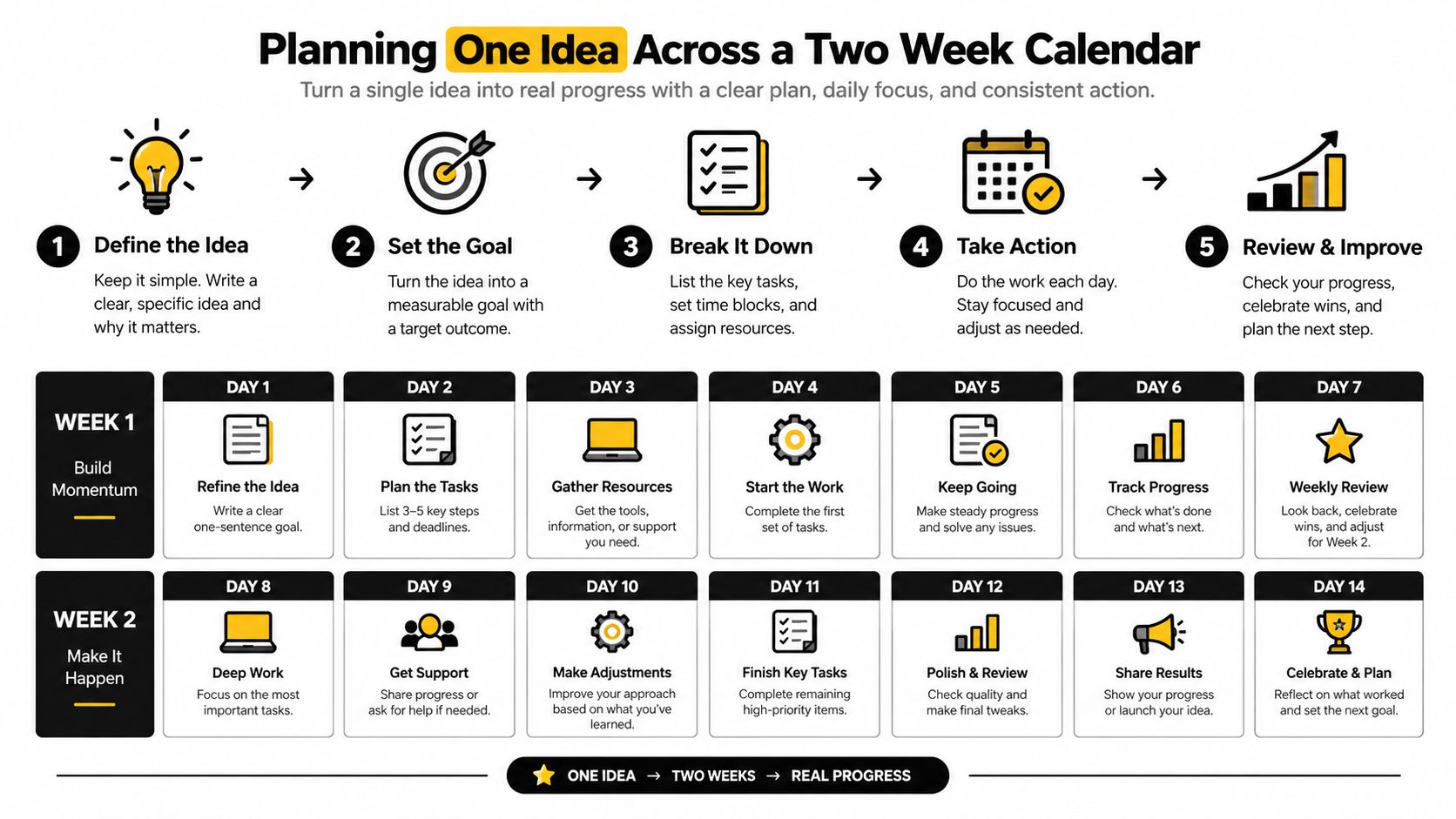
A creator finishes a TikTok on Tuesday and writes "post it everywhere Wednesday" on a sticky note. By Friday the Reel version has flopped and nobody can say whether the idea failed or the copy did. A calendar that only stores dates can't answer that. A useful board runs two to four weeks out, with campaign thinking one to three months ahead: review the board at least monthly, check trends and fresh numbers weekly, and revisit goals, platform mix, and posting frequency quarterly, as this content planning guidance lays out. Test publish times against your own audience activity instead of trusting one universal best hour.
A 30-day calendar model spells out what each row holds: date, platform, format, content type, objective, production status, hook, music, caption, call to action, hashtag, creative brief, reference, and the published-post link. That row is what makes an adaptation traceable later. You can look back and see that Thursday's TikTok used a spoken hook and a different sound, while Friday's carousel kept the claim and dropped the audio.
Tag every element keep or change
The calendar earns its space once each idea gets one source row plus one row per destination. In every destination row, tag each element as keep or change. The core claim and the offer usually stay identical. The hook, length, sound, and caption almost always change, because those are the parts each feed grades differently. That tagging step is the whole minimum-viable-adaptation method: the smallest set of edits that makes each version native, with everything else left alone.
Fill the rows in a fixed order. Audit the profile first: niche, baseline reach, and which older posts earned saves or watch time. Gather sounds, hashtags, and formats that fit that niche. Produce the script, the carousel, and the text post. Then log results against the objective written in the row, and space a teaser away from the main asset so the two don't compete on the same afternoon.
A single row means the idea was duplicated, which is the failure this board exists to catch. The Trendy co-pilot and its mobile apps follow this same sequence when the plan has to travel with you, as noted earlier. If the board leans Instagram-heavy, start from a working Instagram content calendar and add the other networks as extra rows with their own keep and change tags.
Reading Platform Results and Your Next Post
A Reel holds attention to the last second, the TikTok version loses viewers in the opening beats, and the text post earns saves but zero clicks. Merge those three into one engagement rate and the report says the idea "did fine" while hiding which element carried it and which one sank. Read each result on its own platform and format first. A planning framework treats reach, impressions, likes, comments, shares, saves, link clicks, and conversions as fields worth tracking, and lists engagement rate, reach, click-through rate, and conversions as core metrics, as summarized in this social media calendar framework.
Each metric answers a different question. Reach measures distribution, including people who don't follow you. Engagement rate compares interaction to exposure. Clicks show whether the call to action earned a response, and conversions tie the post to a business result like a booking or a purchase. For video, add watch time, because a like proves nothing about the opening. If viewers leave before the correction lands, the hook failed even when the heart icon looked healthy.
Context is what turns a result into a reusable pattern. Record the platform, format, topic, hook, and publish time beside every outcome so the next post copies a pattern instead of a total.
One test you can publish this week
Take one idea that already earned attention and ship two versions of it. Build one natively for the destination and lightly adapt the other from the source. This is the minimum-viable-adaptation check in practice: the claim and the core point stay identical, while the hook, the length, and the framing change to fit the feed. Compare non-follower reach, watch time, saves, and conversions in separate columns. If the native TikTok holds attention and the pasted Reel does not, the open needs work, and "the algorithm" stops being a mood you blame.
Then run the loop covered in the planning section. Connect the account, audit the profile, generate the three variants, and schedule each in its own active window, using the same co-pilot and mobile apps described earlier. Reading the numbers gets easier with a steady habit of social media analytics and reporting tied to the objective you set before anything shipped.
Give the test one week. Turn a post that already worked into a Reel, a TikTok script, and a short text post with separate publish times, and let each variant stand or fall on its own numbers. Whatever wins becomes the source for the next cycle. Whatever loses points at the element to change first: the hook, the length, or the timing.