SEO Title: 10 Engagement Tips That Grow Social Media Across Reels, TikTok, Stories, and Carousels
Meta Description: Use these 10 engagement tips to improve hooks, posting times, comments, carousels, TikTok ideas, and analysis across your full creator workflow.
The fastest way to improve engagement is to fix the workflow, not just the caption. The strongest engagement tips combine sharper hooks, audience-specific timing, native formats, clear CTAs, active community participation, and systematic performance review. That matters even more now because global social media usage reached 5.79 billion people by July 2026, social users grew 5.4% year over year, and the average person spent about 18 hours and 36 minutes per week on social media in 2026, according to Yellow House social media trend coverage.
When that much attention is up for grabs, small workflow fixes compound. A better opening line on Instagram Reels. A cleaner TikTok script. A smarter posting window for Stories. A tighter carousel structure. Faster replies in the first hour. Better follow-through on performance analysis.
This list moves in the order creators work. Audit the profile. Find trends and ideas. Create native content. Publish consistently. Build conversation. Repurpose what earns attention. Then review what happened and do more of what fits your audience. The same system works for Instagram Reels and carousels, TikTok videos and LIVE promotion, Stories, LinkedIn posts, and Threads/X posts.
If Facebook is still part of your mix, these ops-level Facebook engagement tactics are also worth keeping in your playbook.
1. Hook Your First 3 Seconds With Pattern Interrupts
The scroll is your real competitor. Not another creator.
Most weak short-form videos fail before the idea even has a chance because they start with a slow greeting, an unnecessary setup shot, or context that belongs later. Stronger posts interrupt the pattern immediately. A jump cut. Big on-screen text. A surprising claim. A visual before-and-after. A blunt opinion that creates tension.
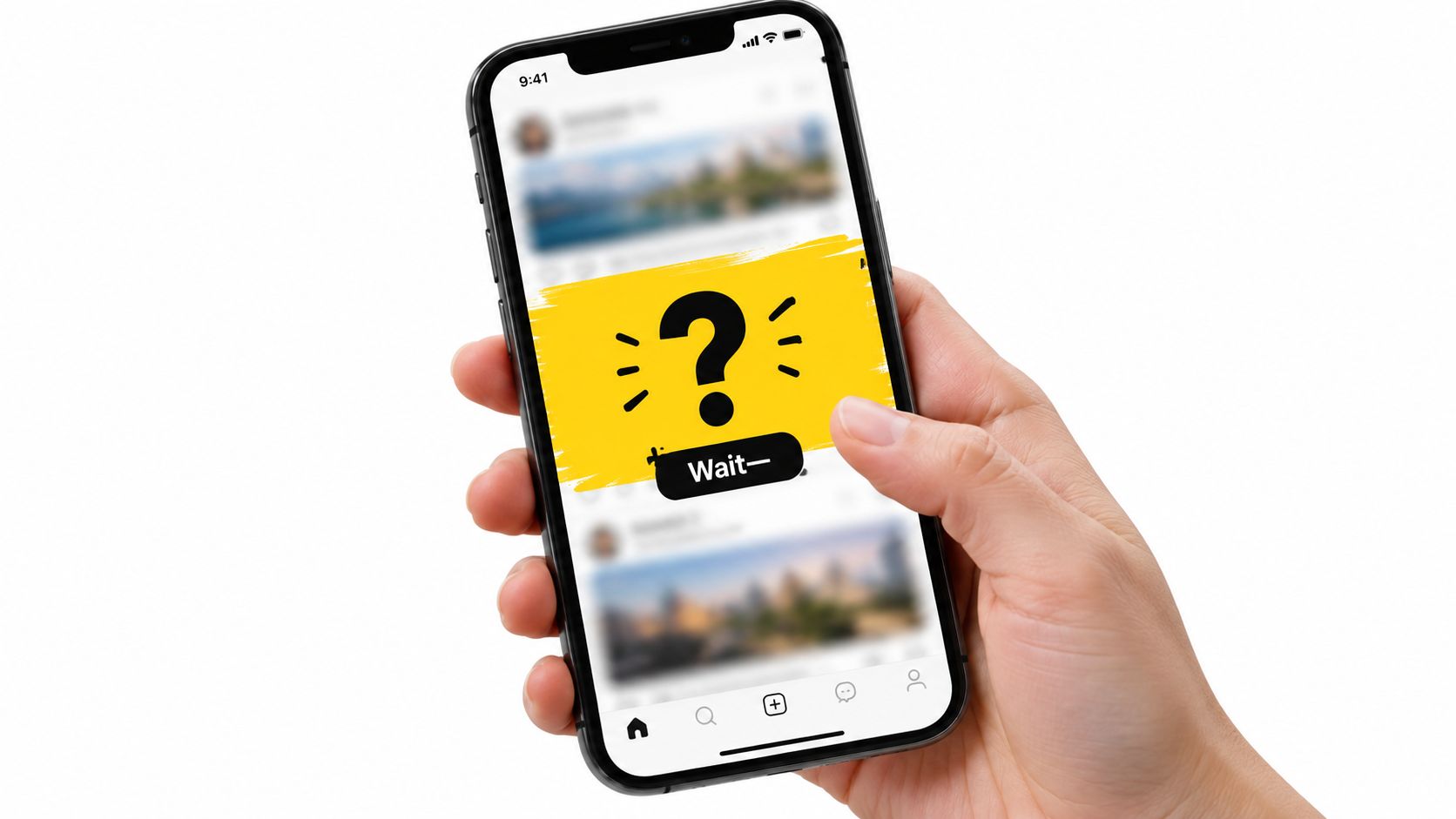
A fitness creator can open on the final rep instead of the warm-up. A beauty creator can show the result in frame one, then explain how it happened. A consultant can begin with “Your content problem probably isn't quality” instead of “Hi guys, today I want to talk about engagement.”
What a real hook change looks like
MrBeast-style packaging works because the premise is obvious before the explanation arrives. Educational creators can steal that lesson without copying the tone. Lead with the consequence, not the backstory.
If you need a practical framework, Trendy is useful at the audit stage because it helps compare which hook styles fit your niche and current content mix across Instagram and TikTok. That's much more useful than copying random viral openings from unrelated accounts. For hook formulas you can adapt fast, read Trendy's guide on how to write hooks.
Practical rule: If your opening frame can be deleted without changing the video, it probably shouldn't be there.
A good weekly test is simple. Try several opening styles across ready-to-shoot video scripts, not just one. Rotate direct claim hooks, mistake hooks, contrarian hooks, and reveal hooks. Keep the body of the video similar enough that you can tell whether the opening changed the result.
Here's a useful reference before you script:
2. Build Hooks Around Unsolved Problems or Curiosity Gaps
Hooks get stronger when they point at a problem people already feel. Not a broad topic. A specific irritation.
“Content planning” is a topic. “Why your content calendar keeps collapsing by Wednesday” is a problem. “Instagram reach” is a topic. “Why your Reels get watched but not shared” is a problem. Those are very different openings, and audiences react differently because one sounds generic while the other sounds like lived frustration.

Creators often overpack the first sentence. They try to mention the audience, the tip, the niche, the result, and the CTA all at once. That muddies the scroll-stopping moment. One unresolved problem is enough.
Better problem framing beats broader relevance
A career creator might say, “My first interviews went badly because I answered too long.” A food creator might say, “The recipe mistake that makes meal prep taste flat by day two.” A software founder on LinkedIn might open with, “The product demo slide that keeps losing buyers.”
That same logic works across formats. Reels can hook with conflict. Carousels can put the problem on slide one. Threads/X posts can open with a tension line. LinkedIn posts can start with a mistake and resolution. TikTok scripts can turn the problem into a spoken cold open and a stronger scene structure.
Don't open with everything you know. Open with the thing your audience wants solved first.
If you're using Trendy, the workflow starts getting practical. Profile Audit shows what has already drawn attention. Trends & Ideas helps surface recurring audience pain points. Content Creation then turns those into hooks, carousels, video scenes, visual post concepts, and caption angles you can publish instead of just admire in a notes app.
3. Use Trending Sounds and Audio Cues Before They Peak
Audio still changes distribution, but only when it feels native. Slapping a trend on top of a mismatched post rarely helps.
TikTok remains the platform to study here because it continues to beat major social platforms on engagement. One 2026 benchmark cited TikTok at roughly 2.8% to 4.25% average engagement versus Instagram at about 0.48% to 1.16%, with the gap especially noticeable for smaller accounts, according to CreatiCalc's 2026 engagement benchmark roundup. That's why trend discovery matters so much for creators who want interaction per post, not just passive views.
Early trend adoption works better than late imitation
The creators who benefit most from trending audio usually catch it while it still feels niche. By the time everyone in your feed is using the sound, your post has to work much harder on concept alone. That doesn't mean you need to chase every sound. It means you need to know which audio cue fits your format and audience.
A skincare creator might pair a calm ambient sound with a texture reveal. A coach might use a recognizable beat under a sharp text-led Reel. A lifestyle creator might use the same audio for three distinct scenes in one week before the trend burns out.
Use trend discovery with some discipline:
- Check niche fit first: A trending sound is only useful if it supports the content's mood or pacing.
- Build multiple takes: When an audio cue fits, make several versions while it still feels fresh.
- Pair sound with a real idea: Audio can improve packaging, but it won't rescue a weak premise.
Trendy fits well here as a social media co-pilot because trend discovery doesn't live in isolation. It connects sounds, hashtags, and idea formats to the rest of your publishing workflow. If TikTok is a core channel for you, Trendy's article on how to find trending sounds on TikTok is a practical place to tighten that process.
4. Create Carousel Posts With Story-Driven Progression, Not Random Slides
Carousels get shared and saved when they create momentum. Random slide collections rarely do.
The practical test is simple. If someone stops after slide two, they should still get value. If they keep swiping, each slide should increase clarity, tension, or payoff. That progression is what turns a post from a design asset into a piece of content people finish.
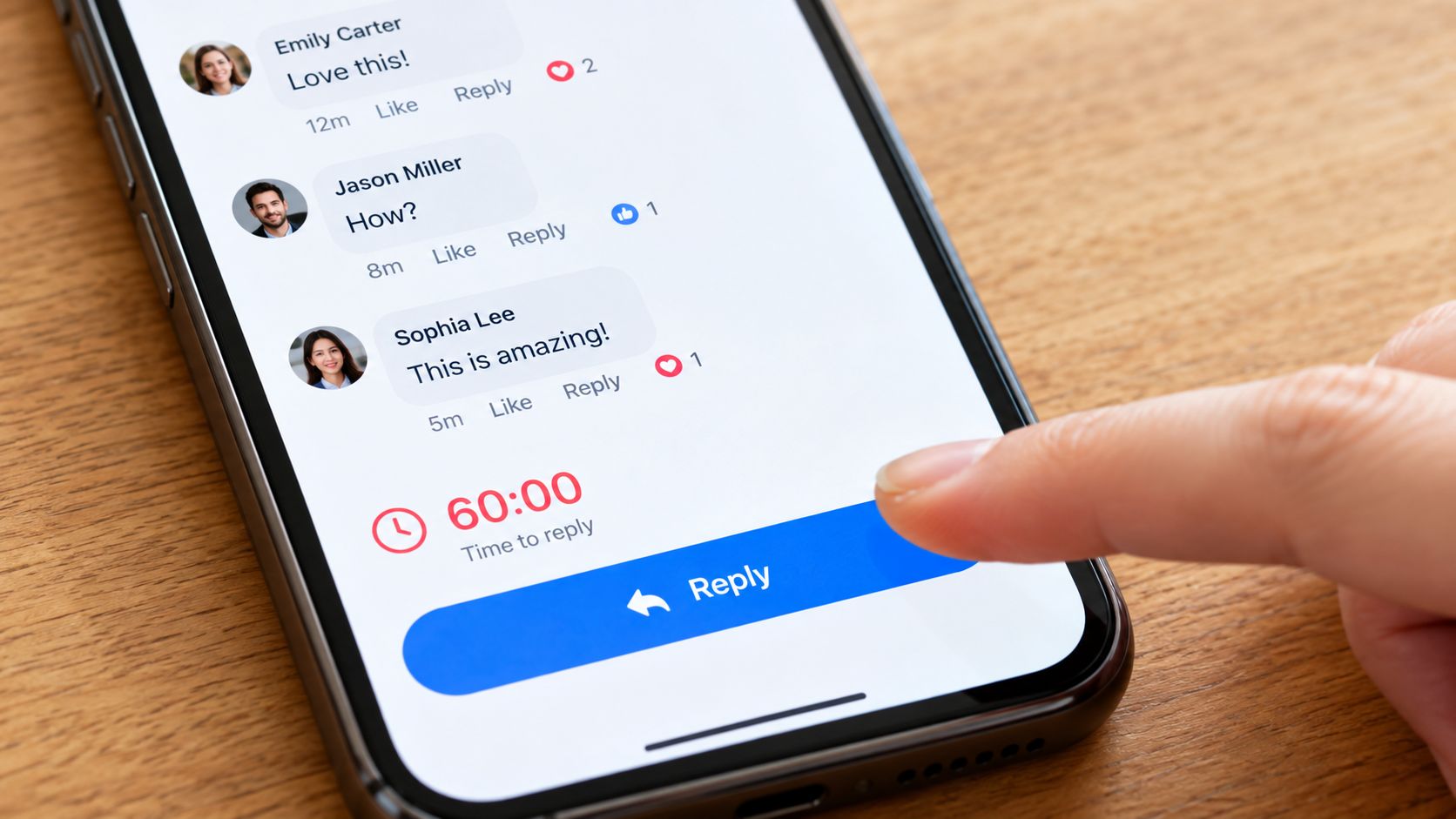
I usually plan carousels like mini narratives, not slide decks. Start with the sharpest claim, problem, or mistake. Then earn the next swipe with sequence. Show what went wrong, what changed, and what to do instead. The final slide should give the audience a clear next action, whether that is saving the post, sharing it with a teammate, or applying the framework this week.
A few swipe paths work especially well:
- Problem, cause, fix, example
- Before, decision, after, lesson
- Myth, reality, proof, action
- Step 1, step 2, step 3, common mistake, recap
This format is strong because it matches how people consume advice across the creator workflow. A good carousel can audit a broken profile element, explain a trend angle, teach a content format, or recap performance lessons from a recent test. One post carries more weight when the sequence is doing the teaching.
There is a trade-off. Carousels usually take more planning than a quick static post, and weak design can slow down the read. But creators often overestimate how polished the slides need to be and underestimate how clear the progression needs to be. Clear wins.
For example, a creator coach might open with “Why your Reels get views but no comments,” use the next slides to isolate two audience mistakes, then finish with a prompt formula people can copy. An ecommerce brand could take one customer objection and turn it into a five-slide sequence that explains the hesitation, answers it, and shows the product in context.
If you want a stronger production process, Trendy's guide on how to make an Instagram carousel is useful for mapping slide progression before you design.
5. Post When Your Audience Is Actually Online, Not When Algorithms Say
Generic "best time to post" charts flatten a detail that changes everything. Audience behavior is different by platform, format, time zone, and niche.
A parenting creator can see Story replies spike during school pickup hours and get stronger Reel comments after 8 p.m. A B2B founder might get LinkedIn discussion early in the workday and weaker results from the exact same post later. Timing is not a universal rule. It is part of your audience audit.
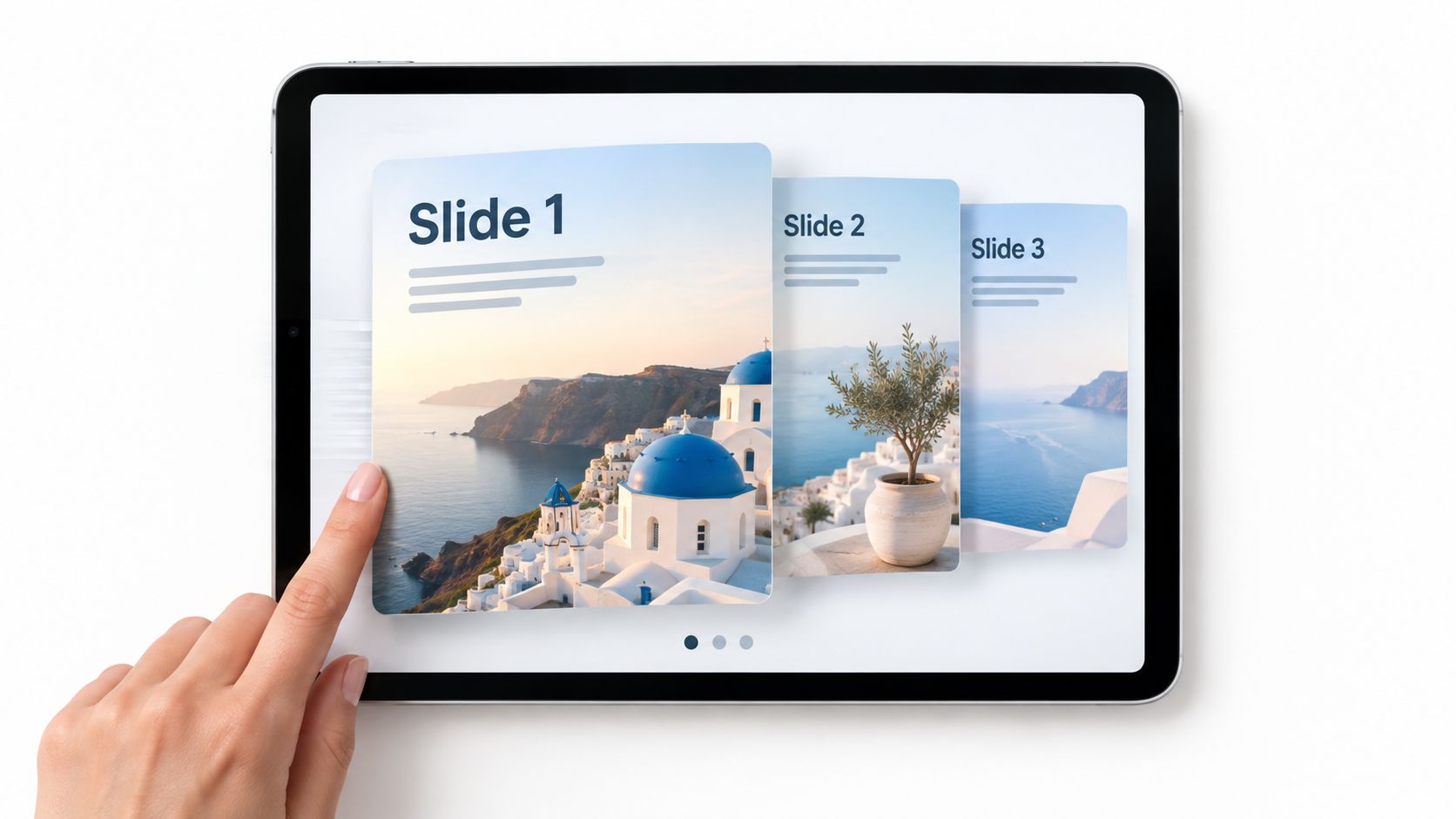
The practical goal is simple. Publish when your audience is likely to notice fast enough to create early interaction. Comments, shares, replies, and saves in the first stretch often matter more than whether a generic study said Wednesday is strong.
Start with your own post history and read it format by format. Reels, Stories, carousels, TikToks, LinkedIn posts, and Threads or X updates do not earn attention on the same clock. I usually review the last 10 to 20 posts in each format, mark publish time, then compare that against early engagement. The pattern to look for is not "highest reach ever." It is repeatable response.
A simple timing check works well:
- Review recent posts that earned strong comments, shares, saves, or replies
- Group them by format instead of lumping everything together
- Compare publish time against first-hour or early-session engagement
- Test two or three posting windows for two weeks before changing the schedule again
That last part matters. Creators change timing too fast and end up testing mood, not behavior.
Trendy helps at this stage because the Profile Audit and Performance Analysis steps connect publish time to post outcomes across formats. That makes it easier to spot whether a morning window helps educational carousels while an evening window performs better for short-form video. The trade-off is that timing only improves content people already want. A weak post published at the perfect hour is still a weak post.
6. Post Consistently on a Predictable Schedule, Not Sporadically
Consistency is how creators stay familiar enough to earn engagement across the full workflow, not just on one good post. If the audit is solid, the ideas are relevant, and the content is native to the platform, an erratic publishing rhythm still breaks momentum.
The goal is not volume. The goal is repeatability.
I usually see the same failure point here. Creators can generate ideas and make good posts, but they rely on spare time to publish them. That works for a week, then the workflow collapses. A predictable schedule fixes that because it turns posting into an operating rhythm instead of a motivation problem.
Here is the practical standard: choose a cadence you can keep during busy weeks, client weeks, and low-energy weeks. Two strong posts every week beats a burst of daily posts followed by silence. Audiences notice reliability, and so do you. It becomes much easier to judge what is working when the publishing pace stops changing every few days.
Instead of planning around dates alone, plan around production stages:
- one session to review what content themes are working
- one session to develop hooks, scripts, or slide outlines
- one session to record or design assets in batches
- one session to schedule, queue, or prep captions and covers
- one session to review saves, shares, comments, and repurpose candidates
That structure matters because consistency is rarely a posting problem by itself. It is usually a workflow problem upstream.
A simple weekly schedule can still flex by platform. Reels and TikToks may come from the same recording block, while carousels, Stories, LinkedIn posts, and Threads or X updates get built from the same core idea in different formats. That is how creators stay present without publishing filler.
Trendy supports that process by connecting idea capture, content creation, scheduling, and post-performance review in one place. If your real bottleneck is keeping a repeatable cadence, this guide on how to stay consistent on social media gives a practical way to set up the routine.
7. Respond to Every Comment in the First Hour
Early comment replies are distribution work.
The hour after publishing decides whether a post turns into a conversation or stalls after the first burst of reach. Creators who treat that window like part of the publishing workflow usually get better signal fast. They see which angle sparked interest, which objection showed up first, and which format deserves a follow-up. Buffer makes the same point in its creator growth playbook, especially around staying present in early post activity instead of treating comments like admin.
A fast reply helps. A useful reply does more.
Here is the practical filter I use: every early comment should get one of three responses.
Clarify. If someone is confused, answer plainly so the next viewer does not have to ask the same thing.Expand. If someone shows interest, add one step, one example, or one caveat.Invite. If someone gives you an opening, ask a specific follow-up that keeps the thread going.
That changes the quality of the thread. “Thanks” ends the exchange. “Was it the hook, edit, or topic that stood out to you?” gives you research you can use for the next post.
Platform behavior matters here. On TikTok, a strong comment can become the next video reply. On Instagram, comment threads often reveal whether the Reel needs a Story follow-up or a carousel version. On LinkedIn, thoughtful replies can pull more professionals into the thread if you answer with a clear opinion instead of a generic acknowledgment.
There is a trade-off. Replying to every comment in the first hour is realistic for many creators early on, but harder once volume climbs. At that point, protect the first wave. Prioritize real questions, buying signals, pushback worth addressing, and comments you can turn into the next piece of content. Short reactions can still get a like, but the high-value comments need words.
One more operational point. If a post gets early traction, keep checking it later the same day. Good content often gets a second life once shares and saves kick in.
If you use Trendy, Performance Analysis can help spot which posts are picking up early momentum so you can put comment time where it has the highest payoff.
8. Use User-Generated Content and Community Comments for Authenticity
Polished posts get attention. Audience participation makes the account believable.
Creators often spend hours refining edits, captions, and hooks, then ignore the strongest proof that the content matters. A customer result, a stitched reaction, a tagged Story, or a smart comment from a follower does more than fill the content calendar. It shows that people are not just watching. They are using, questioning, remixing, and responding.
That changes how your profile feels during the full workflow. Your audit gets clearer because you can see what your audience repeats back to you. Your idea pipeline gets easier because comments reveal objections, confusion, and language worth reusing. Your content gets more native because it starts sounding like the community, not just the creator.
Here is the practical filter I use. If a follower says something better than your draft did, feature it.
A fitness coach can repost a follower's progress update to Stories with one takeaway. A small business can turn a customer question into a carousel that answers the issue step by step. A beauty creator can compile audience results into a Reel and keep each person's original wording on screen. A SaaS founder can pull a sharp objection from the comments and use it as the first line of the next LinkedIn post.
Keep the source material recognizable. Credit the creator. Ask permission before reposting. Edit for clarity if needed, but do not scrub out the personality that made it useful in the first place.
This also solves a common content problem. Solo creators run out of fresh angles faster than they run out of topics. Community input gives you new framing across formats. One strong comment can become a TikTok reply, an Instagram Story poll, a carousel slide, or a short LinkedIn post with your response.
The trade-off is control. User-generated content is messier than studio-shot content. Community comments can be blunt, off-topic, or imperfectly phrased. That is part of why they work. Clean everything up too much and the proof starts feeling staged.
Category matters too. Engagement patterns differ by niche, so the kind of audience proof you feature should match what your audience already responds to. Creator benchmark coverage for 2026 cites fitness and wellness around 5.6% average engagement, food and beverage around 4.8%, fashion and beauty around 4.2%, travel and lifestyle around 4.1%, and technology and gadgets around 3.1%, according to InfluenceFlow's creator niche engagement guide. A fitness audience may respond to progress updates and form-check clips. A tech audience may respond better to customer objections, setup questions, and before-and-after workflow examples.
Treat audience input like raw material, not decoration. Save the comments that reveal intent. Save the tags that show outcomes. Save the remakes that prove your content travels well. Those are not side assets. They are some of the clearest signals for what to create next.
9. Engage With Competitor and Complementary Creator Content Daily
Daily engagement on other relevant accounts is distribution work, not busywork.
Creators who grow steadily treat comments like public samples of their thinking. The goal is not to be everywhere. The goal is to show up where your future followers already pay attention, then give them a reason to click through.
Competitors matter because they attract the exact audience you want. Complementary creators matter because they attract adjacent intent. If you teach meal prep, that could mean commenting on fitness coaches, grocery hauls, kitchen gear reviews, and budget shopping creators. If you sell a local service, it could mean neighborhood businesses, event accounts, and city-focused creators. This part of the workflow sits between idea research and community building. You see what language people use, what objections repeat, and what topics spark replies before you create your next post.
Comment for profile clicks, not for visibility alone
Good comments do one of three things. They add a missing detail. They sharpen the original point with a concrete example. Or they ask a question that pulls more useful discussion into the thread.
A weak comment says, “Great post.” A strong comment says, “The drop-off usually starts before the CTA. The first frame promises one thing, then the middle drifts. Have you seen that in your own retention graphs?” That kind of reply shows expertise without hijacking the post.
I usually recommend a simple operating rule. Keep a short watchlist of accounts across three buckets:
- Direct competitors: Accounts serving the same audience with a similar offer
- Complementary creators: Accounts that solve the problem before or after yours
- Conversation hubs: Niche pages, media accounts, community pages, or topic curators that attract active discussion
Then work the list in 15 to 20 minutes a day. Recent posts first. Comment early when possible. Skip threads where you have nothing useful to add.
There is a trade-off here. High-volume commenting can raise visibility, but it can also make your brand feel opportunistic if every reply reads like prospecting. Fewer, sharper comments usually bring better profile traffic than spraying one-line reactions across 30 posts.
This also helps with content planning. Repeated questions in competitor comment sections often turn into your next Reel, carousel, or Story sequence. That makes this habit useful across the full creator workflow, not just for networking or reach.
10. Repurpose Your Best-Performing Content Into Multiple Formats
Most creators waste good signals.
A post that earns strong watch time, saves, replies, or profile visits has already done the hardest part of the job. It proved the topic connects. In a practical workflow, that makes repurposing less of a creative exercise and more of an editorial decision. The goal is to carry the same core promise through the rest of your content system, from short-form discovery to deeper community formats.
Start with the performance clue, then rebuild the idea for the way people consume each format. A carousel that gets saved usually contains a clear framework. A Reel that gets rewatched usually has a sharp tension point or visual payoff. A Story sequence that gets replies usually raises a specific audience pain point. Use that signal to decide what comes next.
Here is a simple example. Say a carousel on “why your Reels get views but not follows” takes off. The repurposed versions should not be copies.
- Turn the strongest slide into a 20 to 30 second Reel with a tighter hook and one takeaway.
- Turn the common objection from the comments into a Story poll, then answer it in follow-up frames.
- Turn the full argument into a LinkedIn post with more context on conversion, positioning, and audience fit.
- Turn one useful reply into a Threads or X post that invites debate.
That is how repurposing fits the full creator workflow. You audit what already worked, pull out the angle that earned engagement, adapt it natively, and publish it where that format can do a different job.
There is a trade-off. Reusing an idea saves time and improves consistency, but lazy duplication trains your audience to skip. People can tell when a creator pasted the same message everywhere with no regard for platform behavior. The safer rule is this. Repeat the insight. Change the delivery.
I usually use a three-part filter before repurposing anything:
- Keep: What exact promise made the original post work?
- Cut: Which parts were format-specific filler?
- Add: What does this platform need to feel native, such as faster pacing, stronger captions, or a clearer CTA?
If you want a practical framework for adapting one idea across channels without making every post feel recycled, Trendy's guide to content repurposing strategies is useful. For video-first execution, this breakdown of short-form clip strategies proven is a strong companion.
10 Engagement Tips Comparison
| Strategy | 🔄 Implementation Complexity | ⚡ Resource Requirements | 📊 Expected Outcomes (⭐) | Ideal Use Cases | 💡 Key Advantages |
| Hook Your First 3 Seconds With Pattern Interrupts | Medium–High; iterative testing and editing | Video editing tools, trend/audio monitoring, creative tests | ⭐⭐⭐⭐⭐ Higher retention & completion; boosts distribution | Short-form videos (TikTok, Reels, Shorts) in saturated feeds | Grabs attention immediately; adaptable across niches |
| Build Hooks Around Unsolved Problems or Curiosity Gaps | High; requires audience research & hypothesis testing | Analytics, audience interviews, time for research | ⭐⭐⭐⭐⭐ Strong completion rates; sustainable trust & value | Educational, coaching, niche expertise, long-form value content | Builds trust; forces valuable content; long-term ROI |
| Use Trending Sounds and Audio Cues Before They Peak | Medium; daily monitoring and fast execution | Trend discovery tools, quick editing, sound libraries | ⭐⭐⭐⭐ High early algorithmic boost for adopters | Music, comedy, dance, or audio-driven short-form content | Disproportionate reach for early adopters; predictable trends |
| Create Carousel Posts With Story-Driven Progression | Medium; requires narrative design and slide sequencing | Design tools, templates, time to craft cohesive slides | ⭐⭐⭐⭐ Increased engagement, swipe-depth, saves/shares | Instagram carousels for tutorials, transformations, storytelling | Extended viewing time; conveys stepwise credibility |
| Post When Your Audience Is Actually Online, Not When Algorithms Say | Medium; needs 2–4 weeks of data analysis | Follower activity analytics, scheduling tools | ⭐⭐⭐⭐ Faster initial engagement; improved reach & impressions | Any platform with time-zone concentrated audiences | Triggers algorithmic push; reduces content burial |
| Post Consistently on a Predictable Schedule (Not Sporadically) | Low–Medium; requires planning systems & discipline | Content calendar, batching workflow, scheduling software | ⭐⭐⭐⭐ Consistent growth, follower habits, improved retention | All creators focused on steady growth and retention | Builds habits, reduces burnout, favored by algorithms |
| Respond to Every Comment in the First Hour | Medium; real-time monitoring and moderation | Real-time notifications, reply templates, possible moderators | ⭐⭐⭐⭐ Immediate engagement lift; stronger community signals | High-traction posts, launches, community-driven accounts | Boosts distribution quickly; strengthens follower relationships |
| Leverage User-Generated Content and Community Comments for Authenticity | Low–Medium; permission workflows and curation | UGC tracking, permission management, curation time | ⭐⭐⭐⭐ High authenticity, trust, and community retention | Consumer brands, beauty, fitness, lifestyle communities | Social proof with less creative effort; builds loyalty |
| Engage With Competitor and Complementary Creator Content Daily | Medium; daily habit and thoughtful commenting | Creator discovery tools, 15–20 min/day, tracking | ⭐⭐⭐ Moderate follower discovery and partnership potential | Niche creators, B2B consultants, creators seeking collaborations | Free targeted visibility; relationship and collaboration opportunities |
| Repurpose Your Best-Performing Content Into Multiple Formats | Medium; requires format-specific adaptation knowledge | Repurposing templates, editors, scheduling & analytics | ⭐⭐⭐⭐⭐ 3–5x reach per idea; higher ROI per concept | Creators with proven posts and multi-platform presence | Scales reach efficiently; reduces creative risk and workload |
Turn These Engagement Tips Into a Repeatable System
The best engagement tips work when they become operating habits.
Start with a profile audit. Look at your recent posts across Instagram, TikTok, LinkedIn, Threads/X, and Stories. Which hooks got attention? Which formats earned replies, saves, shares, or repost-style behavior? Which posts looked polished but went nowhere? You're looking for patterns, not excuses.
Then move into trends and ideas. Pull audience problems from comments, DMs, weak-performing posts, and recurring objections. Match those problems to formats that fit the platform. A short frustration becomes a Reel hook. A layered lesson becomes a carousel. A contrarian opinion becomes a LinkedIn post. A quick insight becomes a Threads/X post. A specific viewer question becomes a ready-to-shoot TikTok script or a LIVE topic.
Content creation is where either overcomplication or undercooking happens. Don't do either. Build simple scene structures. Choose one hook. Decide the visual concept. Write the CTA before you record. If a topic needs explanation, make a carousel. If it needs personality, make a Reel or TikTok. If it needs authority, make a LinkedIn post. If it needs speed, push it into Threads/X. Native packaging beats copy-paste distribution.
Scheduling matters because inconsistency kills momentum. Queue Instagram Stories and posts, line up TikTok content, and give each piece a clear purpose. Some posts are for reach. Some are for conversation. Some are for saves. Some are for profile clicks. If every post tries to do everything, most of them will do nothing especially well.
After publishing, protect the first hour. Reply fast. Ask follow-up questions. Watch for the posts that start building conversation and support them with more interaction. Save the best comments because they often become your next hooks, scripts, carousels, and visual post concepts.
Then review by format. Don't lump everything together. Reels, carousels, Stories, TikToks, LinkedIn posts, and Threads/X posts all play different roles. Compare openings, scene structures, posting windows, comment activity, and repurposed versions. The point isn't to chase one viral moment. The point is to understand what your audience repeatedly responds to.
That's where Trendy fits naturally. It works best as a cross-format social media co-pilot that connects Profile Audit, Trends & Ideas, Content Creation, and Performance Analysis into one loop. You can use the Trendy web app to support planning and analysis across formats, and if you want the app workflow, there's also Trendy for iPhone and Trendy for Android. If you want extra reading while tightening your system, the Trendy blog guides linked above are the right next step. For another outside perspective, these proven ways to boost social reach are worth a look too.
The creators who improve engagement fastest usually aren't chasing more hacks. They're running a better workflow.
If you want help turning scattered ideas into a real publishing system, Trendy gives you profile insights, trend discovery, hooks, ready-to-shoot scripts, visual post concepts, and performance analysis across Instagram, TikTok, LinkedIn, and Threads/X. Visit Trendy if you want a social media co-pilot that helps you decide what to post, when to post it, and how to improve the next round.