
Welcome to 2026, where the 'post and pray' method of content creation is officially dead. In a world saturated with content, the creators who are actually growing, the ones landing brand deals, building massive communities, and going viral, aren't just lucky. They're strategic. They understand that their audience isn't a monolith; it's a vibrant ecosystem of different groups with unique desires, behaviors, and triggers.
This is where the magic of audience segmentation strategies comes in. By slicing your audience into meaningful groups, you can stop creating generic content for everyone and start crafting magnetic, hyper-relevant posts that feel like a personal message to your most valuable followers. It's the difference between being a forgotten whisper and a roar that the algorithm can't ignore. To truly understand your audience and move beyond guessing, exploring various customer segmentation models can provide invaluable insights into who they are and what they want.
In this comprehensive guide, we'll break down the 10 most powerful audience segmentation strategies that top creators are using right now on TikTok and Instagram. We'll give you actionable steps, real-world examples, and show you how to find these segments within your own follower base. We'll also highlight how cutting-edge tools, like the Trendy analytics app for iOS and Android, can automate this process, turning complex data into your secret weapon for explosive growth. Ready to find your people and give them exactly what they want? Let's dive in.
1. Demographic Segmentation: The Foundational First Step
Alright, let's start with the OG of audience segmentation strategies: demographics. Think of this as your content GPS. Before you can map out a viral-worthy journey, you need to know your starting coordinates. Demographic segmentation is all about slicing your audience into groups based on concrete, measurable traits like age, gender, location, income level, and education. It’s the foundational "who" that informs the "what" and "when" of your content plan.
Are you talking to a 19-year-old college student in Los Angeles or a 45-year-old executive in London? The answer dramatically changes your content's vibe, humor, and even the time you hit "post." This isn't about stereotyping; it's about speaking a language your audience instantly understands.
Real-World Examples in Action
- Beauty Brand on TikTok: A cruelty-free makeup brand wants to reach Gen Z. They segment their audience to females aged 13-24 in major US cities. Their content? Fast-paced, trend-heavy tutorials using popular TikTok sounds and collaborating with micro-influencers from that exact demographic.
- Finance Coach on Instagram: An investment advisor targets high-earning professionals aged 35-55. Their Instagram is filled with sleek, data-driven carousels and Reels breaking down complex market trends. They post during commuter hours and lunch breaks, knowing that’s when their audience checks their feed.
How to Implement This Strategy
Getting this data isn't a secret spy mission. Your own platforms hand it to you.
- Start with Native Analytics: Dive into your Instagram Insights or TikTok Analytics. The "Audience" or "Followers" tab is a goldmine, giving you a clear breakdown of your followers' age ranges, gender distribution, and top city/country locations.
- Test and Learn: Create A/B test content. For example, post two versions of a video: one with Gen Z slang and another with more neutral language. See which one pops off with your target age bracket.
- Time It Right: Don't just post when you feel like it. Use your demographic data to schedule content when your key segments are most active. If your audience is split between New York and California, find a posting time that works for both.
Pro Tip: For a deeper, more automated analysis, an app like Trendy is a game-changer for content creators. Its AI-powered analytics can analyze your follower data and automatically pinpoint the peak activity times for each specific demographic segment you have, taking the guesswork out of scheduling. Download it for iOS and Android.
2. Psychographic Segmentation: Getting Inside Their Heads
If demographics tell you who your audience is, psychographics tell you why they care. This is where audience segmentation strategies get deep. Psychographic segmentation groups people based on their internal landscape: their values, interests, attitudes, and lifestyle choices. It's less about their age and more about their aspirations.
Are you speaking to eco-conscious minimalists who value experiences over things, or ambitious hustlers who are all about personal growth and productivity hacks? Understanding these nuances allows you to create content that doesn’t just get viewed; it gets felt. This is how you stop being a random account they follow and become a creator they truly connect with.
Real-World Examples in Action
- Fitness Influencer on Instagram: Instead of just posting workouts, a coach segments her audience into 'performance-driven athletes' and 'holistic wellness seekers'. For the first group, she posts high-intensity interval training (HIIT) Reels and macro-tracking tips. For the second, she shares yoga flows, mindfulness exercises, and content on stress management.
- Travel Creator on TikTok: A travel vlogger identifies a segment of 'adventure-seeking budget travelers'. Their content focuses on hostel reviews, tips for finding cheap flights, and raw, unpolished videos of hiking and exploring off-the-beaten-path destinations, resonating with a desire for authenticity and adventure over luxury.
How to Implement This Strategy
Uncovering your audience’s mindset is easier than you think. You just need to listen.
- Use Interactive Stickers: Run polls and quizzes on your Instagram Stories. Ask questions like, "Weekend vibe: cozy night in or big night out?" or "What's more important: sustainability or convenience?" These are direct windows into their values.
- Analyze Comment Sections: Look beyond the "love this!" comments. What language are people using? Are they talking about how your content inspired them, made them think, or aligned with their personal goals? This is qualitative data gold.
- Build Content Pillars: Create content categories that align with core values you've identified. If you know your audience values self-improvement, create pillars around productivity, learning, and wellness. This approach strengthens your overall personal branding on social media.
Pro Tip: Reading the digital tea leaves can be time-consuming. As a content creator, you can use an AI-powered tool like Trendy to analyze the sentiment and keywords in your comments, automatically identifying the core values and interests driving your audience. Its trend prediction feature also helps you see which psychographic themes are getting the most positive reactions, so you can double down on what works. Download it for iOS and Android.
3. Behavioral Segmentation: Decoding User Actions
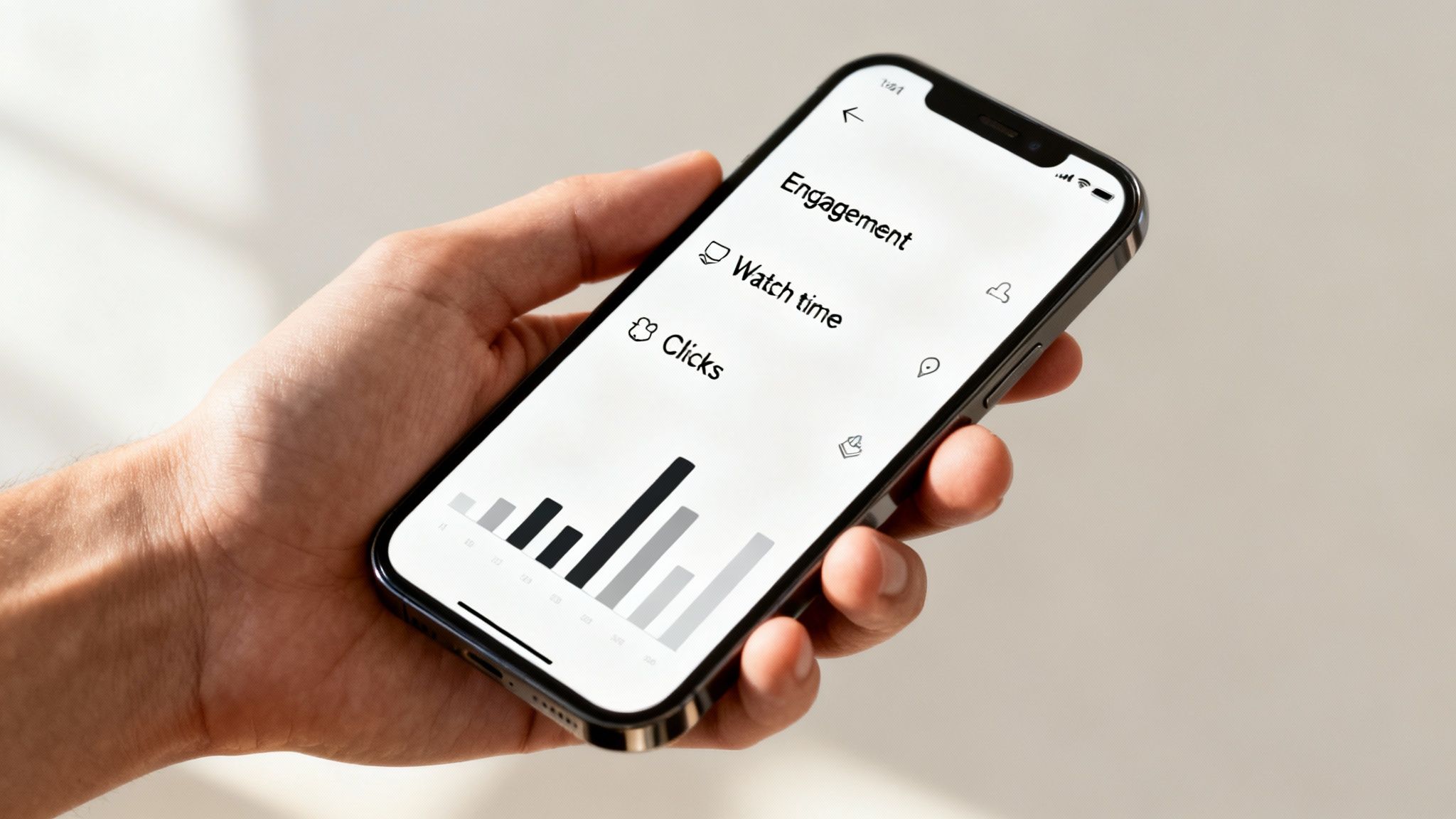
If demographics are the "who," behavioral segmentation is the "what they do." This is where you move past static labels and start analyzing your audience's actual actions on your profile. This strategy groups people based on their engagement patterns, content consumption habits, and interaction frequency. It’s the secret sauce for understanding not just who follows you, but how they follow you.
Are they a "super-fan" who likes every post within the first hour, a "silent watcher" who views every Story but never interacts, or a "link clicker" who is always ready to shop your recommendations? Knowing this is crucial because it directly influences how the Instagram and TikTok algorithms perceive and distribute your content.
Real-World Examples in Action
- Fitness Influencer on Instagram: A trainer identifies a segment of followers who consistently save their workout videos. They create a special "Saved Workouts" highlight reel and run polls asking this group what type of exercises they want to see next, making them feel valued and heard.
- Food Blogger on TikTok: A creator notices a group that always clicks their affiliate links for kitchen gadgets. They create more "must-have gadget" videos and direct this segment to a curated list on their website, driving more affiliate revenue.
How to Implement This Strategy
This is all about getting granular with your analytics and rewarding the right actions.
- Identify Your Super-Fans: Look at who comments, shares, and engages the most. Create exclusive content for them, like a "close friends" list on Instagram or a shout-out in a video, to nurture that loyalty.
- Analyze Content Consumption: Check your watch time and completion rates. If a segment of your audience drops off after 10 seconds on long videos, create shorter, punchier content specifically for them.
- Re-engage the Inactive: Identify followers who haven't engaged in the last 30 days. Target them with a re-engagement campaign, like a poll, a Q&A, or a video on a completely new topic to see if you can win them back. A deep dive into social media analytics is key here.
Pro Tip: Manually tracking all these behaviors can be a nightmare. Trendy simplifies this for content creators by using AI to analyze engagement patterns and automatically segment your audience. It can identify your 'super-fans' and 'at-risk' followers with its detailed follower reports, giving you clear insights on who to target with what content. Get it on iOS or Android to start decoding your audience's behavior.
4. Geographic Segmentation: Making the World Your Local Market
If demographics tell you who you're talking to, geographic segmentation tells you where they are. This isn't just about knowing if your audience is in NYC or Sydney; it’s about understanding the culture, climate, and time zones that shape their daily lives. Geographic segmentation carves up your audience by location, from country and city down to specific neighborhoods or climate zones. It’s a critical piece of the puzzle for anyone with location-specific offers or a global follower base.
Are you promoting a winter jacket line in July? For your audience in Australia, that’s perfect timing. Posting a "Good Morning" story at 9 AM in Los Angeles? You're hitting your European followers right as they're winding down for bed. This strategy is about being locally relevant on a global scale, transforming your content from a generic broadcast into a personal message that feels like it was made just for them.
Real-World Examples in Action
- Australian Lifestyle Blogger: An influencer in Melbourne creates "Cozy Winter Morning Routines" in August, aligning perfectly with the Southern Hemisphere's seasons, while her US counterparts are posting beach content. This makes her content highly relatable to her local audience.
- International Fashion Brand: A brand with a large following in both the US and the Middle East creates two versions of a campaign. One features summer dresses for their American audience, while the other showcases a more modest, culturally-aligned collection for their followers in the UAE, complete with region-specific hashtags.
How to Implement This Strategy
Your followers' location data is waiting for you, and using it is easier than you think.
- Consult Your Analytics: Head straight to Instagram Insights or TikTok Analytics. The "Audience" tab will show you a breakdown of your top cities and countries. This is your roadmap for global content domination.
- Create a Global Posting Schedule: Don't just post on your own time. Identify the peak activity hours for your top 3-4 geographic markets and create a schedule that covers those windows. This ensures your content lands at the top of the feed for everyone, not just your local followers.
- Localize Your Content: Go beyond just scheduling. Use trending hashtags, sounds, and cultural references specific to a region you’re targeting. Planning a post around Diwali for your Indian audience or Thanksgiving for your US followers shows you’re paying attention.
Pro Tip: Managing multiple time zones is a headache for any content creator. An app like Trendy simplifies this with its intelligent scheduling features. It analyzes your global audience distribution and creates an optimized weekly posting plan that maximizes reach across different regions, telling you exactly when to post to hit your audience in London, New York, and Tokyo. You can download it for iOS and Android.
5. Technographic Segmentation: Speaking Your Audience’s Digital Language
It’s not just who your audience is, but how they consume your content that matters. Welcome to technographic segmentation, the strategy that categorizes your audience based on the technology they use. This includes their preferred devices (iPhone vs. Android), social media platforms (TikTok native vs. Instagram Reels loyalist), and even the content formats they gravitate towards. In 2026, understanding this is non-negotiable for creators optimizing for the scroll.
Are your viewers watching your carefully crafted 4K masterpiece on a tiny smartphone screen or a desktop browser? Do they tap through Stories religiously or only binge-watch Reels? This type of segmentation helps you tailor your content’s format, aspect ratio, and interactive features to fit precisely how your audience experiences it. It’s about meeting them where they are, device in hand.
Real-World Examples in Action
- A Gaming Influencer on TikTok: This creator discovers their audience is 90% mobile-first, using the native TikTok app. They stop producing wide-screen YouTube-style content and go all-in on vertical 9:16 videos, using interactive polls and green screen effects that perform best within the app's ecosystem.
- A Fashion Brand on Instagram: The brand notices that their iOS users engage heavily with link stickers in Stories, driving sales. Meanwhile, their Android users prefer saving and sharing Reels. They create two distinct content streams: exclusive product drops in Stories for iPhone users and trend-focused, shareable Reels for their Android segment.
How to Implement This Strategy
You don’t need to be a tech wizard to gather this data; the clues are right in your analytics.
- Analyze Device Usage: Check your native analytics to see what devices your content is viewed on most. Are they primarily mobile? This instantly tells you to prioritize vertical video formats (9:16) for everything you create.
- Test Content Formats: Run experiments. Post an interactive poll in your Stories and a detailed carousel post on the same topic. See which format resonates more with your audience. Does one get more engagement from your tech-savvy followers?
- Optimize for Platform Nuances: Recognize that how users interact on the TikTok app versus the Instagram app is different. Test different video lengths, sounds, and effects to see what your specific audience segment prefers on each platform.
Pro Tip: Manually tracking device preferences is a chore. The Trendy app streamlines this for content creators by analyzing your top-performing content and showing you which devices and platforms your audience uses most. Its content performance reports give you insights to double down on the formats that work, ensuring your content always looks perfect on your followers' screens. You can download it for iOS and Android.
6. Engagement-Level Segmentation: Separating Fans from Followers
Let’s get real: not all followers are created equal. Some are ride-or-die fans who comment on every post, while others are silent lurkers you haven't heard from since 2024. Engagement-level segmentation is one of the most powerful audience segmentation strategies because it sorts your audience based on how much they actually interact with you. This isn't about who they are, but what they do.
By splitting your audience into tiers like "Super-Fans," "Engaged Followers," and "Passive Viewers," you can stop screaming into the void and start having meaningful conversations. You can nurture your biggest advocates, re-engage the quiet ones, and allocate your creative energy where it will have the biggest impact.
Real-World Examples in Action
- Beauty Influencer on Instagram: A makeup artist identifies their top 5% most engaged followers. They create exclusive "Close Friends" Stories showing behind-the-scenes content and early product peeks, making these fans feel like true insiders.
- Tech Creator on TikTok: A creator reviewing the latest gadgets notices a segment of followers who have gone silent for 30 days. They launch a re-engagement campaign with a "What Tech Do You Want to See Reviewed Next?" poll, specifically targeting this inactive group to bring them back into the fold.
How to Implement This Strategy
Turning this insight into action is all about identifying, nurturing, and re-engaging.
- Identify Your Tiers: Manually scrolling through comments is a nightmare. Use analytics to identify your engagement levels. Who are your top commenters, sharers, and DM-sliders? Who hasn't liked a post in months?
- Create Tier-Specific Content: Reward your super-fans with exclusive access, like a private Discord server or a special Q&A Live. For passive followers, create highly interactive content like polls, quizzes, and direct questions to encourage their first interaction.
- Launch Re-Engagement Campaigns: Craft content specifically for your inactive segment. A "We miss you!" post or a challenge asking for their input can be incredibly effective at reminding them why they followed you in the first place.
Pro Tip: Manually tracking engagement is impossible at scale. An app like Trendy is designed for this. Its performance analytics automatically identify your most engaged followers, flagging potential "super-fans" as they emerge. For content creators, this means you can track engagement trends over time and catch declining segments before they go completely dark. Download it for iOS and Android to get started.
7. Content-Preference Segmentation: Speaking Their Content Language
Ever wonder why your hilarious Reel got crickets while a simple carousel post went nuclear? Welcome to content-preference segmentation. This strategy is about dividing your audience based on the types of content they eat up. It goes beyond who they are and focuses on what they love to watch, read, and share. This could be video format (Reels vs. Stories), content themes (tutorials vs. behind-the-scenes), or even aesthetic style (minimalist vs. vibrant).
Not everyone on your follower list wants the same thing. Some crave quick, 30-second hacks, while others want a deep-dive carousel they can save for later. Ignoring these preferences is like a chef serving a five-course meal to someone who just wanted a slice of pizza. This is one of the most direct audience segmentation strategies for optimizing your content mix and ensuring your creative energy isn't wasted.
Real-World Examples in Action
- Fitness Creator on Instagram: A fitness coach notices their audience engages way more with quick 30-second workout Reels than with 10-minute long-form videos. They shift their strategy to produce more short, high-energy clips, using longer formats only for dedicated Q&A sessions on Stories.
- Tech Reviewer on TikTok: A creator reviewing gadgets realizes their audience is split. One segment loves hyper-detailed spec breakdowns, while another just wants to see the product in a real-life use case. They create two content series: "Tech Deep Dive" for the enthusiasts and "Does It Actually Work?" for the practical users.
How to Implement This Strategy
Figuring out what your audience wants is less about mind-reading and more about data-diving.
- Audit Your Winners: Conduct a content audit. Go through your last 20-30 posts and categorize them by format (Reel, carousel, static image) and theme (educational, personal, trend-based). Identify which categories consistently get the most saves, shares, and comments.
- Analyze Comment Sentiment: Don't just count comments; read them. Are people asking detailed questions on your educational carousels? Are they tagging friends in your funny Reels? The quality of the discussion tells you which themes are truly generating value.
- Test New Formats Cautiously: Dedicate 10-20% of your content schedule to testing new formats or themes. This allows you to innovate and discover new preferences without tanking your engagement or confusing the algorithm.
Pro Tip: Stop guessing what will work. For content creators, an app like Trendy is invaluable. Its AI analyzes your post performance to pinpoint which content formats and themes drive the most engagement for your specific audience. It even provides personalized trend suggestions to help you create viral content your followers are already looking for. You can download it for iOS and Android.
8. Value-Based Segmentation: Identifying Your VIP Followers
Not all followers are created equal, especially when your goal is monetization. This is where value-based segmentation, one of the most powerful audience segmentation strategies, comes into play. It’s about identifying the audience members who bring the most value to your brand, whether through purchases, affiliate clicks, or high-value contract potential. Think of it as finding the 20% of your audience that drives 80% of your revenue.
This strategy moves beyond simple engagement and asks, "Who is actually converting?" By categorizing your audience based on their lifetime value (LTV) and purchase intent, you can stop shouting into the void and start whispering directly to your most profitable followers. It’s the secret to maximizing ROI without alienating the rest of your community.
Real-World Examples in Action
- E-commerce Creator on Instagram: An influencer promoting sustainable fashion discovers through affiliate link tracking that followers from specific countries have a 3x higher conversion rate. They create targeted Instagram Stories with country-specific shipping offers and product highlights just for that high-value segment.
- B2B Consultant on TikTok: A marketing consultant notices that followers who identify as "SaaS founders" in their bios are the most likely to book a discovery call. She creates a series of TikToks directly addressing SaaS pain points, complete with case studies and a clear call-to-action for a free strategy session.
How to Implement This Strategy
This requires a bit more than just checking your native analytics, but the payoff is huge.
- Track Everything: Use unique UTM parameters or dedicated affiliate codes for different content series or platforms. If you're promoting a product in your bio, a Reel, and a Story, use a different link for each to see which channel drives the most valuable traffic.
- Segment Your Offers: Create tiered content or exclusive offers. Your highest-value segment might get early access to a new product drop or a special discount code. This not only rewards them but encourages others to become high-value members.
- Analyze Purchase Data: If you sell your own products (like digital guides or merchandise), analyze your sales data. Where do your best customers live? What content did they engage with right before buying? Use this info to build a profile of your ideal customer.
Pro Tip: While a tool like Trendy helps content creators identify their most engaged followers, you can cross-reference that data with your sales analytics. See if your "Top Fans" identified by Trendy's follower reports overlap with your top customers. This confirms who is both highly engaged and high-value, allowing you to create hyper-targeted loyalty programs. Get it on iOS or Android.
9. Acquisition & Intent-Based Segmentation
Not all followers are created equal. This advanced audience segmentation strategy digs into two critical questions: Where did they come from? and What do they want? Acquisition tells you how they found you (a viral Reel, a paid ad, a collab), while intent reveals why they’re scrolling (for a laugh, to learn something, or to find a solution). Combining these gives you a powerful map of your most valuable growth channels.
Knowing that followers from your latest trending sound engage 3x more than those from paid ads is a game-changer. It’s about understanding which sources deliver not just numbers, but genuinely engaged, high-intent fans. This isn't just growth; it's smart, sustainable growth that aligns your content plan with your acquisition strategy.
Real-World Examples in Action
- Fitness Creator on Instagram: A fitness coach discovers followers acquired from a "30-Day Ab Challenge" Reel are 5x more likely to sign up for her program. She pivots her strategy to create more problem-solving, educational Reels that tap into that high-intent audience.
- DIY Guru on TikTok: A home decor creator notices followers from a collaboration with a popular interior design account have a much higher retention rate. They double down on partnerships with complementary creators, knowing that audience is primed for their specific niche.
How to Implement This Strategy
This requires a bit of detective work, but the payoff is huge.
- Track Your Sources: Use unique discount codes or affiliate links for each partner collaboration to track attribution. For external traffic, UTM parameters are your best friend to see what’s driving clicks from your blog or newsletter.
- Analyze Your Winners: When a post blows up, don't just celebrate the views. Dive into the analytics to see how many followers it generated. What was the hook? Was it educational, entertaining, or inspirational? Replicate that winning acquisition-intent formula.
- Map Content to Intent: Create content pillars dedicated to different intents. Mondays could be for motivational content (inspiration-seekers), Wednesdays for detailed tutorials (education-seekers), and Fridays for fun trends (entertainment-seekers). This is a core part of effective audience segmentation strategies that ensures you serve your entire community.
Pro Tip: To master intent, content creators should use an app like Trendy. Its AI analyzes emerging trends and suggests specific hooks and content ideas designed to capture different user intents, like problem-solving or entertainment. This helps you align your content with the right acquisition channel for maximum impact. You can download it for iOS and Android.
10. Micro-Segment & Persona Development
Now, let's assemble all our data points into a super-powered strategy. Micro-segmenting and developing personas is where you go from knowing who your audience is to knowing them. This approach combines demographic, psychographic, and behavioral data to create fictional-but-factual characters representing your key follower types. Instead of shouting into a void, you're talking directly to "Sarah the Busy Mom" or "Early-Adopter Eddie."
This isn't just a creative writing exercise; it's a strategic framework. By giving your segments names, faces, and motivations, you create an empathy-driven content plan. You’ll instinctively know what jokes will land, what problems need solving, and what content will make them smash that "share" button. This is one of the most advanced audience segmentation strategies, but it's also one of the most effective.
Real-World Examples in Action
- Fitness Creator: Instead of a generic "fitness tips" page, a creator develops three personas: 'Jake the Gym Enthusiast' (gets advanced workout splits), 'Sarah the Busy Mom' (gets 15-minute home workouts), and 'Marcus the Wellness Beginner' (gets nutrition basics and motivational content). Each gets tailored content on different days.
- Tech Reviewer: A creator segments their audience into 'Practical Patricia' who wants real-world use cases, and 'Budget-Conscious Bob' who needs value-for-money comparisons. This means one video might be a "day in the life" test, while another is a "best phones under $500" roundup.
How to Implement This Strategy
This is where analytics meets imagination. You need to combine data with human insight.
- Synthesize Your Data: Pull demographic, psychographic, and behavioral data. Look for clusters. Do you have a large group of 18-24 year-old urban dwellers who exclusively engage with your fashion-forward Reels? That’s a potential persona.
- Create Persona "One-Pagers": For your top 3-5 segments, create a simple document. Give them a name, a stock photo, a quote, their goals, and their pain points. This makes them feel real and keeps your content strategy focused.
- Content Plan by Persona: When brainstorming, ask: "What would Jake find useful today?" or "What would make Sarah laugh?" This instantly refines your ideas and ensures you’re always providing value to a specific segment.
Pro Tip: Use an app like Trendy to collect the raw data you need for your personas. Its deep analytics on follower interests, engagement patterns, and demographics provide the perfect foundation for content creators. Then, enrich this data with audience surveys to nail down their motivations. Download it for iOS and Android to start building your audience profiles.
10-Point Audience Segmentation Comparison
| Segmentation Type | Implementation Complexity 🔄 | Resource Requirements & Speed ⚡ | Expected Effectiveness ⭐ | Results / Impact 📊 | Ideal Use Cases & Tips 💡 |
| Demographic Segmentation | Low — straightforward, analytics-ready | Low resources, fast to implement | ⭐⭐ — broad targeting, foundational | Good reach and basic targeting; moderate engagement | Use as a starting filter; schedule by timezone; use native insights |
| Psychographic Segmentation | Medium — needs qualitative insight | Moderate resources, moderate speed | ⭐⭐⭐⭐ — drives authentic resonance | Stronger engagement and loyalty; deeper brand fit | Run surveys, analyze comments; build content pillars around values |
| Behavioral Segmentation | Medium — data-driven tracking required | Moderate–high resources, regular monitoring | ⭐⭐⭐⭐ — aligns with algorithmic performance | Improves engagement, retention, and monetization signals | Track watch time and clicks; tailor content for super-fans |
| Geographic Segmentation | Low — location data readily available | Low resources, fast to apply | ⭐⭐⭐ — improves relevance by region | Better local relevance and time-optimized reach | Localize content; optimize posting times across markets |
| Technographic Segmentation | Medium — technical profiling needed | Moderate resources, testing across devices | ⭐⭐⭐ — optimizes format and UX | Better format performance and reduced friction | Prioritize aspect ratios, test on iOS/Android, optimize file sizes |
| Engagement-Level Segmentation | Medium — tiering followers by interaction | Moderate resources, ongoing review | ⭐⭐⭐⭐ — focuses ROI on high-value followers | Identifies advocates and re-engagement opportunities | Create VIP content, re-engage inactive tiers, reward super-fans |
| Content-Preference Segmentation | Medium — requires performance audits | Moderate resources, iterative testing | ⭐⭐⭐⭐ — improves content mix efficiency | Reduces wasted effort; increases format-specific engagement | Audit content types; test new formats on a subset of posts |
| Value-Based Segmentation | High — needs commerce and attribution data | High resources, slower setup | ⭐⭐⭐⭐ — directly tied to revenue outcomes | Maximizes monetization and sponsorship ROI | Use tracking links, offer premium deals to high-value segments |
| Acquisition & Intent-Based Segmentation | High — complex attribution and intent signals | High resources, needs UTMs and testing | ⭐⭐⭐⭐ — optimizes growth channels and intent fit | Improves follower quality and acquisition ROI | Track sources with UTMs; map content to user intent; iterate channels |
| Micro-Segment & Persona Development | High — synthesizes multiple data types | High resources and time, periodic updates | ⭐⭐⭐⭐ — enables hyper-personalized strategy | Highly targeted messaging; better team alignment | Build 3–5 validated personas; combine analytics + interviews |
Your Next Viral Video Starts With One Smart Segment
And there you have it, the ultimate social media glow-up playbook for 2026. We've journeyed through ten distinct audience segmentation strategies, moving from the broad strokes of demographic and geographic data to the incredibly detailed art of micro-segment and persona development. It's easy to look at a list like this and feel overwhelmed, picturing endless spreadsheets and data-induced headaches. But that’s the old way of thinking. The new way is about precision, not volume.
The secret to explosive growth on platforms like TikTok and Instagram isn't about shouting into the void and hoping someone listens. It’s about whispering the perfect message directly into the ear of someone who’s been waiting to hear it. That's the power you unlock when you stop creating for "everyone" and start creating for "someone."
From Theory to Trendsetter: Your Action Plan
Remember, you don't need to master all ten strategies overnight. The goal is to build your segmentation skills layer by layer, like crafting the perfect video edit.
- Start with the Foundation: Begin with what you can easily see. Use your platform analytics to get a handle on your Demographic and Behavioral segments. Who are they, and what are they already doing? This is your baseline.
- Add Some Spice: Once you know the "who" and "what," dive into the "why." Layer on Psychographic or Content-Preference segmentation. What do they believe? What formats make them stop scrolling? This is where you inject personality and create content that truly connects.
- Go for the Kill Shot: Ready to level up? Focus on Acquisition & Intent-Based or Engagement-Level Segmentation. Target those on the verge of following, or re-engage the loyal fans who are just waiting for you to notice them. This is how you convert casual viewers into a die-hard community.
The core takeaway is this: every single one of these audience segmentation strategies is a tool designed to close the gap between you and your followers. When you understand what makes a specific group tick, you can craft hooks that grab their attention, use sounds that are already stuck in their heads, and deliver value that feels tailor-made for their life. This isn’t just good marketing; it's how you build a genuine, algorithm-proof relationship with your audience.
The Real Prize: Sustainable, Authentic Growth
In the fast-paced world of social media, trends come and go, but a deep understanding of your audience is forever. Mastering segmentation means you’re no longer just chasing virality; you're building a sustainable content engine. You'll spend less time on content that flops and more time creating hits because you're operating from a place of insight, not guesswork.
This deep knowledge transforms your content creation process. Instead of asking "What should I post today?" you'll start asking "What does my 'Weekend DIY-er' segment need to see today?" or "What kind of meme would my 'Eco-Conscious Millennial' segment share instantly?" This subtle shift is what separates struggling creators from thriving digital entrepreneurs. Your content becomes more relevant, your engagement skyrockets, and your influence becomes undeniable. You're not just another face in the feed; you're a trusted voice for a specific community you helped build, one smart segment at a time.
Ready to skip the spreadsheets and get straight to the insights? The Trendy app is your personal segmentation strategist, analyzing your audience data to deliver personalized, trend-driven post ideas that are practically guaranteed to resonate with your specific followers. Stop guessing and start creating with data-backed confidence by downloading from the App Store or Google Play today